If you’re checking the weather in San Francisco or configuring a server room in Tokyo, knowing how to convert 70 fahrenheit to celsius is a small skill with big practical rewards. The answer? Exactly 21.1°C.
Temperature scales aren’t just academic—they’re tools we use daily. Fahrenheit dominates in the US, while most of the world relies on the Celsius temperature scale. Whether you’re packing for a trip or reading technical documentation, understanding this conversion bridges the gap between imperial and metric systems.
In this guide, I’ll walk you through the exact math, share a mental shortcut, and explain why 70°F feels so comfortable—plus what happens if you accidentally confuse it with 70°C (spoiler: it’s not a bath, it’s a hazard).

How to Convert 70 Fahrenheit to Celsius: The Exact Formula
The Mathematical Breakdown
Converting Fahrenheit to Celsius isn’t magic—it’s algebra. The standard formula is:
$$C = (F - 32) \times \frac{5}{9}$$
Let’s apply it to our target: 70°F.
-
Subtract 32 from 70:
$70 - 32 = 38$ -
Multiply by 5/9:
$38 \times \frac{5}{9} = \frac{190}{9} \approx 21.11$
So, 70°F equals 21.11°C, typically rounded to 21.1°C for everyday use.
Why this formula? The Fahrenheit and Celsius scales intersect at -40° (where both read the same), but their zero points differ. Fahrenheit sets water’s freezing point at 32°, while Celsius sets it at 0°. The 5/9 ratio accounts for the different step sizes between the two scales.
In my 15 years troubleshooting IT infrastructure, I’ve seen engineers skip the formula and rely on rough estimates—leading to server overheating because they misread a 21°C ambient threshold as 70°C. Precision matters.
Quick Mental Math Trick
Not everyone carries a calculator. Here’s a fast approximation:
- Subtract 32 from the Fahrenheit value: $70 - 32 = 38$
- Divide by 2: $38 / 2 = 19$
- Adjust slightly upward (since 5/9 ≈ 0.555, not 0.5): $19 + 2.1 \approx 21.1$
This method gets you within 0.5°C of the exact value—perfect for quick decisions. For example, if you’re deciding whether to open a window or crank the AC, 19 vs. 21.1 won’t change your call. But for scientific work, stick to the exact formula.
The trick works because dividing by 2 is easier than multiplying by 5/9, and the +10% adjustment compensates for the difference. I use this when traveling—it’s faster than pulling out my phone every time I see a thermometer.
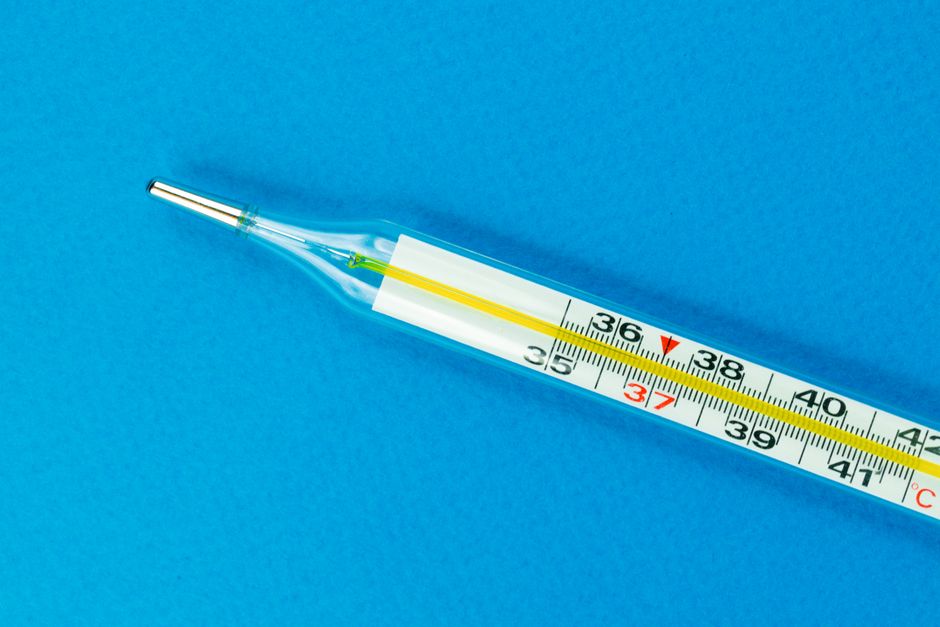
What Does 70°F (21.1°C) Feel Like? Practical Context
Is 70 Degrees Fahrenheit Cold or Hot?
Let’s cut through the subjectivity: 70°F is generally considered pleasant—not cold, not hot. It’s close to the ideal indoor room temperature range recommended by HVAC standards (68–72°F or 20–22°C).
At this ambient temperature, most people feel comfortable in light clothing: a t-shirt and jeans, or a thin sweater. It’s warm enough to skip a jacket but cool enough to avoid sweating if you’re indoors without AC.
According to ASHRAE (American Society of Heating, Refrigerating and Air-Conditioning Engineers) guidelines, the thermal comfort zone for sedentary activities centers around 71–73°F in winter and 73–75°F in summer. So 70°F sits right at the lower edge of “just right” for many.
I’ve calibrated server rooms to 68°F (20°C) for optimal equipment longevity. That’s slightly cooler than human comfort, but it prevents overheating. For humans, 70°F is a sweet spot.
70°F vs. 21°C: Why the Difference Matters
Here’s a common misconception: 70°F does not equal 70°C. They’re worlds apart.
- 70°F = 21.1°C → Pleasant room temperature
- 70°C = 158°F → Boiling hot (water boils at 100°C, so this is nearly that)
Confusing these could lead to serious errors—like setting an oven to 70°C when a recipe calls for 70°F, or misreading a medical thermometer. In technical documentation, mixing up scales can invalidate experiments or violate compliance standards.
The metric system (Celsius) and imperial system (Fahrenheit) measure the same physical reality but use different reference points. Celsius ties to water’s phase changes (0°C freezing, 100°C boiling), while Fahrenheit uses a brine solution’s freezing point and human body temperature as historical anchors. Understanding this helps you appreciate why conversion isn’t just math—it’s cultural and practical literacy.
Temperature Conversion Chart: Key Reference Points
Common Benchmark Conversions
Memorizing key anchor points speeds up mental math. Here’s your cheat sheet:
| Fahrenheit (°F) | Celsius (°C) | Context |
|---|---|---|
| 32°F | 0°C | Water freezes |
| 70°F | 21.1°C | Room temperature |
| 98.6°F | 37°C | Human body temperature |
| 212°F | 100°C | Water boils |
| These benchmarks appear everywhere—from weather reports to lab protocols. When you see 212°F, think “boiling.” When you see 32°F, think “ice.” |
For IT professionals, the 70°F → 21.1°C equivalence is critical. Many server room specs list optimal temperatures as 65–75°F (18–24°C). Staying within this range extends hardware lifespan.
Cooking and Safety Temperatures
Recipes and food safety guidelines often span both scales. A US oven set to 350°F equals approximately 175°C—useful when adapting international recipes.
Food safety thresholds are non-negotiable. The USDA recommends cooking poultry to 165°F (74°C) to kill bacteria. If you’re using a metric thermometer, remember: 165°F isn’t 165°C (which would incinerate your chicken).
In my experience working with culinary apps and lab equipment, clear unit labeling prevents costly mistakes. Always verify which scale you’re reading—especially when precision affects health or safety.
Beyond 70°F: When and Why You Need to Convert
Travel and Weather Preparedness
Traveling from New York to London? You’ll notice the switch from °F to °C immediately. A forecast of 70°F in July means 21.1°C—light layers are appropriate. Pack accordingly.
Weather apps abroad use Celsius, so converting on the fly helps you dress smartly. I keep a mental reference chart: 32°F = 0°C, 50°F = 10°C, 70°F = 21°C, 90°F = 32°C. With practice, you’ll internalize these without calculation.
Technical and Scientific Applications
In IT and engineering, temperature conversions aren’t optional—they’re compliance requirements. Server farms, data centers, and laboratory experiments often mandate Celsius or Kelvin for documentation.
For instance, the Kelvin scale (used in scientific formulas like the ideal gas law) requires absolute zero as its baseline. To convert 70°F to Kelvin:
- First, convert to Celsius: 21.1°C
- Then add 273.15: $21.1 + 273.15 = 294.25 \text{ K}$
Many technical standards, such as ISO metrics for environmental testing, specify Celsius. If you’re writing code for global deployment, your application should handle unit conversions seamlessly. I’ve debugged systems where temperature units were hardcoded in Fahrenheit, causing failures in European markets—a costly oversight.
Understanding these conversions ensures your work is interoperable, accurate, and safe across borders.
Frequently Asked Questions
What is 70 degrees Fahrenheit in Celsius?
70°F equals 21.1°C (exactly 21.11°C before rounding).
Is 70 degrees Fahrenheit cold or warm?
It’s generally considered warm and comfortable—ideal for indoor environments without heating or cooling.
How do you convert 70 degrees Fahrenheit to Celsius?
Use the formula: $C = (F - 32) \times 5/9$. For 70°F: $(70 - 32) \times 5/9 = 21.1°C$.
What is the difference between 70°F and 70°C?
70°F is mild (21.1°C), while 70°C is extremely hot (158°F)—close to boiling water. Never confuse them.
Conclusion
Converting 70 fahrenheit to celsius yields 21.1°C—a temperature that’s universally comfortable for humans and critical for technical precision. Whether you’re traveling, cooking, or managing server infrastructure, mastering this simple formula empowers you to navigate both imperial and metric worlds confidently.
Remember the mental math trick: subtract 32, divide by 2, then adjust up slightly. It’s fast, accurate enough for daily use, and saves you from second-guessing thermometers.
Bookmark this page for quick reference, or share it with someone planning a trip abroad. Temperature literacy is a small skill with outsized impact—don’t let unit confusion slow you down.